Earn Dollars with Click'n'Earn NOW ! ! ! ! ! !

Showing posts with label by CNN. Show all posts

New Sony Reader adds touchscreen, wireless downloads

After letting Kindle dominate the e-book reader market for two years, Sony has fired a huge salvo in return.
Sony's newest e-book will add wireless 3G connectivity and a 7-inch touchscreen.

Sony's newest e-book will add wireless 3G connectivity and a 7-inch touchscreen.

The new Sony Reader Daily Edition adds wireless 3G connectivity from AT&T, a larger 7-inch screen, and a touchscreen. The company has also created a feature called Library Finder that will allow users to borrow e-books from their local libraries, for free.

The Reader Daily Edition will cost $400 and is expected to be in stores this December.

"Sony has given the market what everyone was waiting for in terms of a wireless device," says Sarah Rotman Epps, a Forrester analyst who has been covering e-readers. "Not only that, they have gone one step further, and shown their latest product is no copycat of the Kindle."

Since Amazon introduced the Kindle in 2007, e-readers have become a surprisingly hot consumer product category. Though Sony was the first to launch an e-reader, the company has lagged behind its biggest rival. One key missing feature was wireless connectivity: Until now, Sony Reader users who wanted to purchase or download books had to connect their e-reader to a PC using the USB connection.

By contrast, the Kindle has always offered free over-the-air wireless downloads of books through Sprint's network. Amazon also aggressively pursued publishers, enabling the company to offer a wide selection of popular books for download.

Now Sony is fighting back on both the features and the content fronts. The Reader Daily Edition offers portrait and landscape orientation. In portrait mode, about 30-35 lines of text are visible, offering an experience similar to that of a printed paperback book, says the company. The device has enough internal memory to hold more than 1,000 standard e-books, says Sony, and it has expansion slots for memory cards.

The Reader Daily Edition is the third new e-book reader the company has introduced in the last few weeks. Earlier this month, the company launched a $200 5-inch screen device called the Sony Reader Pocket and a $300, 6-inch touchscreen model called the Sony Reader Touch. Amazon's Kindle 2 e-reader with 6-inch display sells for $300 and the large 9.7-inch screen Kindle DX costs $490; neither of them has a touchscreen.

Sony Reader's second big weakness compared to the Kindle has been access to content. Amazon's position as a leading online retailer of books helped the company offer a wide selection of e-books to Kindle buyers that were competitively priced and easy to download.

To match that, Sony has partnered with OverDrive, a distributor of e-books to libraries, to offer its customers easy access to the local library's collection of e-books. Sony Reader customers can use the company's Library Finder software and check out e-books with a valid library card. Users will have to download the books to a PC first and then transfer them to the Reader. The e-books will expire at the end of the 21-day lending period.

Sony has also said it will adopt the open EPub format in a move that allows consumers to purchase or download books from the Sony store and read them on any EPub-compatible device. In contrast, Amazon uses a proprietary file format that only allows users to read books they've bought using the Kindle, or Amazon-sanctioned Kindle software.

"From the beginning, we have said that an open format means more choice for consumers," says Steve Haber, president of Sony's Digital Reading Business Division. "Now, readers can shop around for what interests them rather than be locked into one store."

Still, it won't be easy to beat Amazon, says Epps.

"Sony is number two in the market and though they are in a strong position to close the gap with Amazon over the holiday season, I expect Amazon to still be the market leader in early 2010," she says.

"Amazon has built a very strong relationship with e-book buying consumers that were the first wave of adopters of electronic readers," says Epps.

Sony's Daily Edition e-reader will also have to contend with newer rivals vying for a piece of this fast growing segment. IRex, a Dutch company, said Monday it will launch a 8.1-inch touchscreen e-reader in the United States later this year. IRex has partnered with Barnes & Noble to use the latter's e-books store to power its device. Meanwhile, another company, Plastic Logic, has been working to introduce its notepad-sized 8.5-inch reader targeted at business users.

"Consumers are now split between the small pocket-sized devices with 5-inch or 6-inch screens and the larger screen 8-inch to 10-inch screen readers," says Epps. "But it is not over yet. The market is still evolving."

E-books catching on with readers

Paul Jessup is an avid reader who is increasingly turning to e-books to feed his love of the written form. It's not just ease of use that draws Jessup to books in a digital form, it's the potential e-books represent.

E-books, such as Sony's Readers, are less than 3 percent of the total publishing market, but are catching on fast.

E-books, such as Sony's Readers, are less than 3 percent

of the total publishing market, but are catching on fast.


"It's much better for looking things up, since any e-reader's search function is 10 times better than flipping and looking and searching on my own" in a printed book, said Jessup, an Erie, Pennsylvania-based writer.

He is one of a growing number of bibliophiles, spurred by new reading technologies like Amazon's Kindle, who are gravitating to the digital realm.

Key developments in displays are improving e-book reading devices, whether it be E Ink's displays in products like the Sony Reader and the Kindle, or the easy on the eyes organic light emitting diode (OLED) screens being used in netbook computers and smartphones. Up-and-coming technology promises to enhance e-book reading even further.

Low-power, reflective e-paper displays, which can be read in direct sunlight, are expected to hit the market in the next year from companies like Prime View International and Plastic Logic, said Nick Colaneri, director of the Flexible Display Center at Arizona State University.

"At first these will be flat and largely indistinguishable from the displays in devices like Amazon's Kindle," Colaneri said. "But the availability of a new feature like mechanical flexibility always stimulates the creative energies of designers."

Truly flexible displays could be available in three to five years, Colaneri said. Electronic readers could become as thin as a sheet of paper and able to contain hundreds of book titles, magazine articles and other content.

Internet connectivity will go hand in hand with these devices, letting consumers download content from just about anywhere using Wi-Fi or mobile phone networks.

In fact, they already can. The Kindle connects wirelessly to Amazon's store, allowing users to buy and download books to the device within minutes. Not to be outdone, Barnes & Noble recently launched its own e-book store and an e-reader app that allows users to download books to their smartphones.

Last month, Sony announced its first e-book reader with built-in wireless capability. The Reader Daily Edition will sell for $399 when it debuts in December.

Apple also is rumored to be working on a wireless tablet device with a large screen that would be better suited than an iPhone for reading digital content.

It seems the time is right for these advances. E-book sales are seeing a significant upswing, said Hugh McGuire, CEO of Book Oven, an online company that builds Web tools for publishing e-books and print-on-demand titles.

"The U.S. wholesale e-book market was about $50 million in 2008 (retail would be about double), but it's growing exponentially," McGuire said, citing figures from the International Digital Publishing Forum, a group that tracks the e-book market. McGuire said that in the first quarter of 2009, the wholesale market was about $25.8 million, an increase of 53 percent over the previous quarter.

McGuire concedes that e-books are only 1 to 3 percent of the overall publishing market. But the success of the Kindle, and moves by Google -- who, along with Sony, is offering free titles online -- indicate a bright future, he said.

"I would expect 20 percent of book sales to be digital by 2014, but some have predicted an even bigger percentage by then," he said. "Twenty percent of the current book market is something like $5 billion."

That raises the question: What will happen to printed books?

"E-books will gain, especially in the indie publishing market, making it far easier for a company or individual to sell a quirky, unique book for little money and see profits almost immediately," said Jessup, the Pennsylvania author and e-book reader.

Even so, Jessup said he believes print and digital books will coexist for some time. He released his first work, "Open Your Eyes," as an e-book, but his publisher, Apex Books, lets buyers order the book via print-on-demand. It's also available on the Espresso Book Machine, an in-store device from On Demand Books that lets customers at independent bookstores print books.

For e-books to reach their full potential, McGuire said, a shift in thinking is in order.

"[Publishers] have long operated in an environment where printing a book was expensive," he said. "Shipping it around, stocking it in stores and selling it all represented significant costs. They still think in this mindset."

Publishers need to realize that e-books can get titles to more readers for less money, he said.

"Successful publishers will be those who embrace the benefits of e-books and pay more attention to what their readers want."

Microsoft, Google expand search-engine tools

Say you're buying a dog. You know the breed you want; you can picture it in your head. But what was the name? A bull terrier? A pit bull? A bull mastiff ?


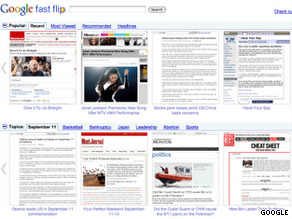
Google's Fast Flip application displays articles as they appear on news or magazine Web sites.

Or what if you're in the market for a new camera? You saw a friend with a credit-card-thin model at a party last weekend. But was that a Canon? A Nikon? A brand you've never heard of?

If you're like many people, you'd turn to the Internet for answers. But you type in "dog breeds" or "digital cameras" into Google and punch enter, and a big list of blue links comes up. You don't see the dog you want. You don't find the camera, either -- at least not quickly.

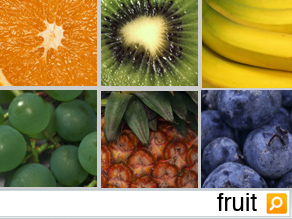
Such quandaries are the driving force behind Bing's new "visual search" function, which lets Web users troll through image catalogues instead of Web pages when they know what something looks like but can't put their finger on the name.

The examples are also evidence that the search engine market, once dominated by simple rectangular search bars and the lists of Web pages that follow, is diversifying. People who once were happy with a one-search-fits-all model are finding exceptions, and a number of niche search products are trying to respond to these increasingly diverse needs.

Also this week, Google introduced a test product called Fast Flip, which takes a retro look at Web design by making online news look like something magazine readers will find familiar.

The company has other news products -- namely Google Reader and Google News -- but is looking for ways to make news content more visual and to share some of the revenue.

The new products come as Microsoft's Bing continues to elbow for more room in an online search market that Google has dominated for years. In June, 65 percent of all Internet searchers were done through Google sites, according to comScore. Microsoft caught only 8.4 percent of searchers in the same period.

Fast Flip, an experimental feature of Google Labs, is a Web application that allows users to scan news articles from 39 print and online publishers, including The New York Times, Newsweek, TechCrunch and Us magazine.

Users can "flip" through a horizontal stream of screen grabs of articles as they appear on the partners' Web sites, with layout, design and images intact. You can click once on a story to enlarge the page; a second click takes you to the partner's site. Users also can browse popular topics (the economy, Taylor Swift) or search for others of their choosing.

Google says the idea behind the new service is to make online news-browsing faster and replicate the reading experience of flipping through a magazine or newspaper.

Unlike Google News, which emphasizes breaking news articles from the past 24 hours, Fast Flip "is more for stories with a longer shelf life," Google spokesman Chris Gaither said.

"We think there's a lot of room for innovation in how people consume news articles on the Web," Gaither said. "The easier it is for people to browse articles quickly, the more they'll read."

Loren Baker, editor of Search Engine Journal, says that increases in bandwidth make "visual search" functions more successful today than in previous years, when images would load more slowly.

Baker believes that Google Fast Flip could make it easier for people to scan news articles on their netbooks, tablets or even smartphones.

"I don't have to sift through my bookmarks. I don't even have to leave Google," he said. "It's almost like a virtual newsstand on my handheld."

But not everyone is excited about Google's new product.

"If this is the future of news, I think news is kind of screwed," said Frederic Lardinois, a writer at ReadWriteWeb, a technology blog. Lardinois said the interface is backward-thinking and is hard to use.

Fast Flip is in a test phase and will incorporate feedback from users, Gaither said. Google also is seeking to expand the roster of Fast Flip partners, he said.

Some tech observers say Bing's hyper-visual search function gives it a new leg up on Google in terms of functionality.

Nova Spivack, a search expert and founder of Twine, said the most important thing about Bing's visual search is that users can sort the images into categories.

By creating different kinds of searches and making them sortable, Bing is catering to high-end Internet users -- which, soon, will be everyone, he said.

"I think Bing has realized that everybody is becoming a search geek," he said.

On the dog-breed search example, users can filter the images to include only terriers, or hypoallergenic dogs or toy dogs, or dogs that need a medium level of exercise, so they don't have to scroll through hundreds of photos to find the dog they're searching for.

Mary Jo Foley, editor of the All About Microsoft blog at ZDNet, said she personally finds Bing's visual search useless because she's not a visually minded person. But she said it's an example of search engines diversifying, and that's a good thing for everyone.

"I think the idea for Microsoft and Google and Yahoo is to present things in new ways and say, 'What if you could do this? Would you want to do it this way?' "

She added: "Not all people search in the same way, and not all people want to get their results in the same way."

There are about 50 galleries of images in the new Bing visual search bin, but more will be added, and eventually the idea will be integrated into the main search site, said Stefan Weitz, director of Bing. Right now, users have to go to a separate page to find the visual searches.

Google Wave to be released to 100,000 testers Wednesday

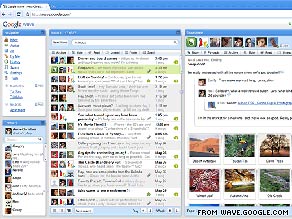
Google Wave, a product that promises to revolutionize online communication, will go out to about 100,000 beta testers Wednesday.

The Web application from Google Inc. combines elements of e-mail, chat, Wiki documents, blogs and photo-sharing sites to create a form of Internet communication called a "hosted conversation," or a "wave."

Google demonstrated Wave at the Google I/O developer conference in San Francisco, California, in May. The closed group of beta testers will help Google fish bugs out of the application before a public release by the end of the year, according to the Google Wave Web site.

The app was created by Jens and Lars Rasmussen, the Australian brothers who developed Google Maps. The Rasmussen brothers said they hope Google Wave will eventually replace e-mail as the main way people converse on the Internet.

"This should be something everybody uses and something everybody knows," Jens Rasmussen said.

In Wave, e-mail-like communications can be edited by several users simultaneously. And users can chat about certain sections of Wave documents in real time, where all users see what a person is typing as it is typed. If a person comes to the conversation late, they can replay everything they've missed.

The Rasmussens hope these functions will make online communication more efficient and collaborative.

Jens Rasmussen said e-mail is a computer version of snail mail. Wave will be something new, a real-time communication system designed specifically for today's faster-paced, multitasking Internet, he said.

"We really have a much too strong tendency to just take things we know and just adapt them to the digital world," he said.

Tech bloggers have largely cheered the release of the product. But there are some concerns that the app may be too complicated for mainstream Web users.

In a video demonstration, the Rasmussens spend an hour and 20 minutes explaining Wave.

Initial reviews of Wave also noted a number of glitches in the application.

Ben Parr of the social-media blog Mashable writes that Wave still has bugs but that the product is improving over time.

"As an initial user of Wave, I have to tell you: things have gotten much more stable. It still has a slow response time in certain situations and it can still crash, but these things happen far less often than they used to," he writes.

The blog TechCrunch wrote that Wave "drips with ambition" and will be "a new communication platform for a new Web."

"Wave offers a very sleek and easy way to navigate and participate in communication on the Web that makes both email and instant messaging look stale," TechCrunch's MG Siegler wrote.